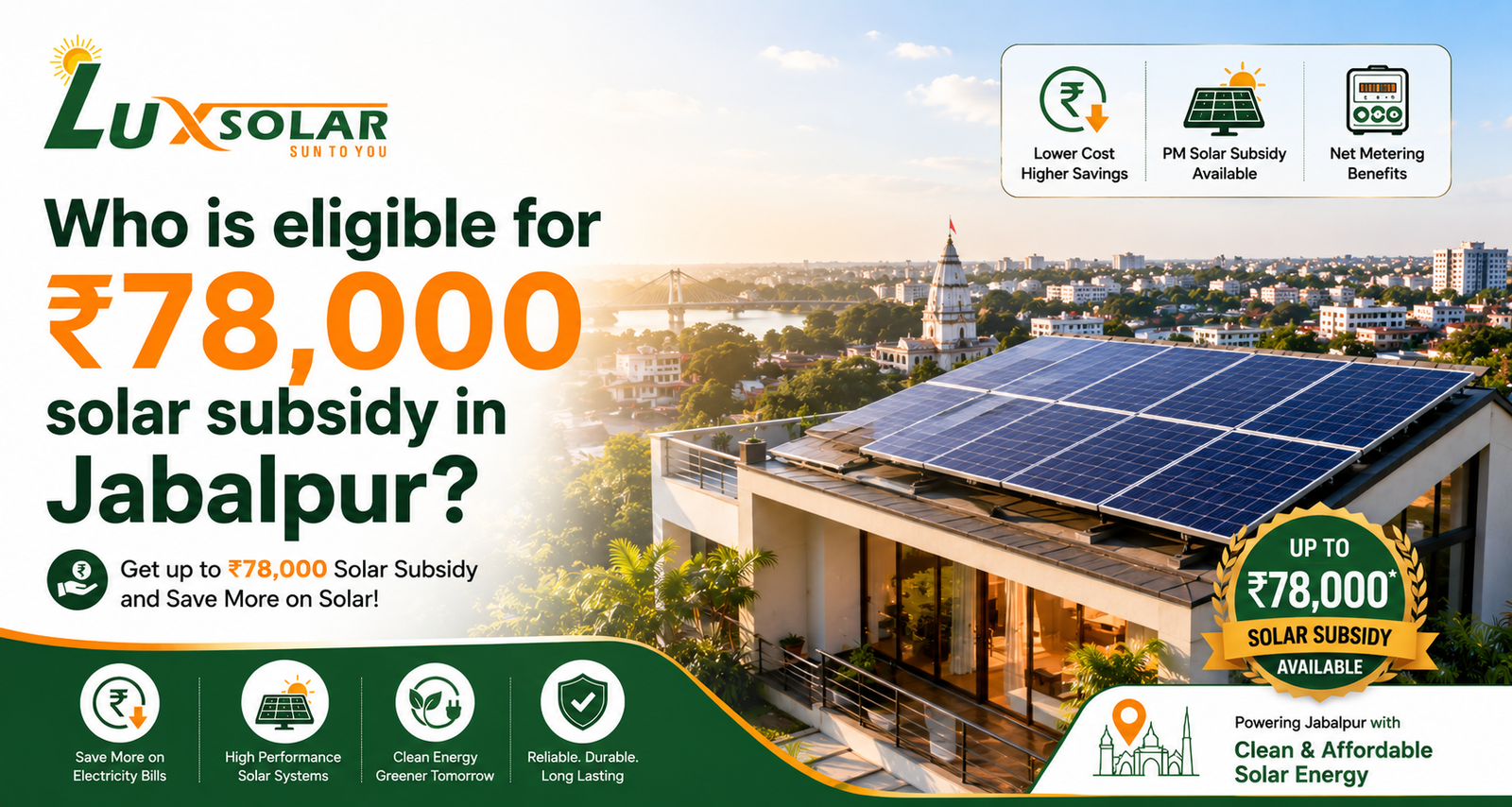
Who is eligible for ₹78,000 solar subsidy in Jabalpur?
Switching to solar power in 2026 is no longer just an environmental statement; it’s a strategic financial move for millions of Indian households. With the government’s push toward renewable energy, the PM Surya Ghar: Muft Bijli Yojana has simplified the transition by offering a substantial financial cushion. If you are exploring the world of solar panels in Jabalpur or anywhere else in India, the figure “₹78,000” has likely caught your eye.
But who exactly is eligible for this maximum subsidy amount, and how do you ensure the money reaches your bank account? Let’s dive into the specifics of the 2026 subsidy landscape.
Understanding the ₹78,000 Subsidy Threshold
The central government has designed the subsidy structure to favor residential households. The ₹78,000 cap is the maximum Central Financial Assistance (CFA) provided for a single residential connection. To hit this maximum limit, the size of your solar system plays a crucial role.
The Capacity-Subsidy Relationship
The subsidy is calculated based on the kilowatts (kW) you install. Here is how the breakdown looks in 2026:
System Capacity | Subsidy Rate | Total Subsidy Amount |
1 kW | ₹30,000 per kW | ₹30,000 |
2 kW | ₹30,000 per kW | ₹60,000 |
3 kW | ₹30,000 for first 2kW + ₹18,000 for 3rd kW | ₹78,000 |
Above 3 kW | Capped at 3kW rate | ₹78,000 (Fixed) |
Export to Sheets
Key Takeaway: To be eligible for the full ₹78,000, you must install a system of at least 3kW capacity. If you install a 5kW or 10kW system, the subsidy remains fixed at ₹78,000.
Eligibility Criteria: Are You Qualified?
Not everyone who installs solar panels in Jabalpur can claim this amount. The government has set specific guardrails to ensure the benefit reaches the intended demographic—primarily “poor and middle-income” residential consumers.
1. Residential Status
The subsidy is strictly for residential households. Commercial buildings, industrial units, and non-profits are generally ineligible for this specific Direct Benefit Transfer (DBT). They may benefit from other tax incentives like accelerated depreciation, but they won’t receive the ₹78,000 cash subsidy.
2. Technical Requirements (The ALMM Rule)
This is a critical point often missed. To claim the subsidy, you must use solar modules that are on the Approved List of Models and Manufacturers (ALMM). These are high-quality, usually Made-in-India panels. If you install non-approved or imported panels that aren’t on the list, your subsidy application will be rejected.
3. Connection and Roof Ownership
- Active Connection: You must have a valid electricity connection in your name (or the name of a family member residing in the house).
- Roof Rights: You must own the house or have legal rights to use the rooftop. In 2026, even tenants can apply if they have a long-term lease and a No Objection Certificate (NOC) from the landlord.
Why Local Expertise Matters: Lux Solar India
Navigating the PM Surya Ghar portal and ensuring technical compliance can be a headache for the average homeowner. This is where a professional partner like Lux Solar India makes a difference. Based in Jabalpur, Lux Solar India has helped hundreds of families successfully claim their ₹78,000 subsidy without the usual bureaucratic delays.
They ensure that your system is sized correctly—never exceeding your “sanctioned load”—which is a common reason for application rejection. By choosing Lux Solar India, you get the assurance of ALMM-compliant hardware and a team that handles the “Feasibility Approval” process with the local DISCOM on your behalf.
Steps to Claim Your Subsidy in 2026
The process is now fully digitized through the National Portal for Rooftop Solar. Here is the streamlined journey:
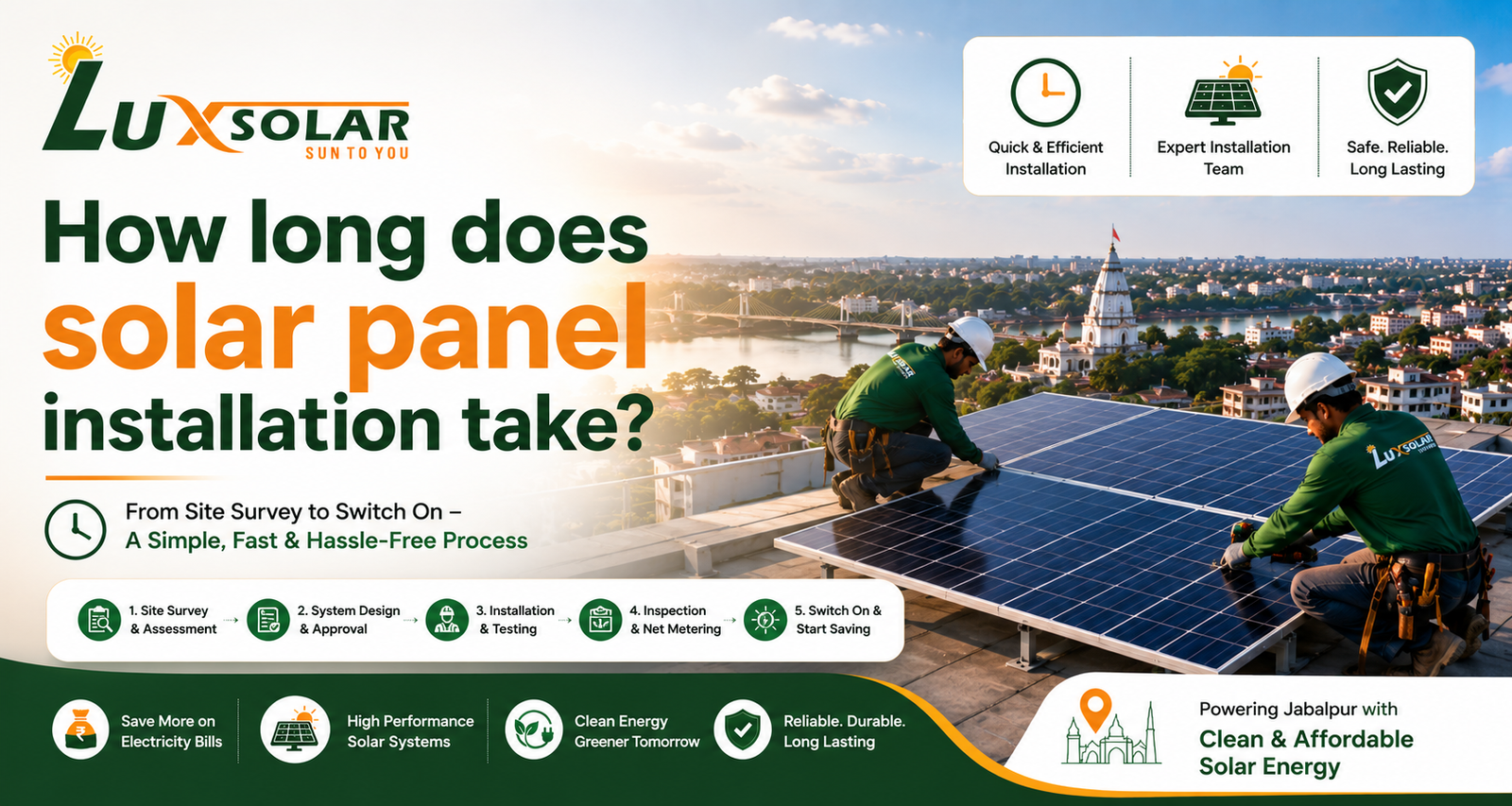
- Registration: Register on the portal using your mobile number and electricity consumer number.
- Feasibility Approval: Your local DISCOM will check if your local transformer can handle the solar load.
- Installation: Once approved, you must get the system installed by an empaneled vendor like Lux Solar India.
- Inspection & Net Metering: After installation, the DISCOM inspects the site and installs a bidirectional “Net Meter.”
- Subsidy Release: Once the commissioning certificate is generated, the subsidy is credited to your bank account within 30 days.
Frequently Asked Questions (FAQs)
- Can I get the ₹78,000 subsidy if I install an off-grid system with batteries? No. The PM Surya Ghar subsidy is currently only available for on-grid (grid-tied) systems. Off-grid systems are considered a private choice for backup and do not receive central financial assistance.
- What if my sanctioned load is only 2kW, but I want to install a 3kW system for the full subsidy? You cannot install a solar system larger than your sanctioned load. You will first need to apply to your electricity department to increase your sanctioned load to 3kW before applying for the solar subsidy.
- Is there an income limit to be eligible for the ₹78,000? The scheme is broadly aimed at low and middle-income families. While there is no strict “income certificate” required for the basic subsidy, certain state-specific “top-up” subsidies may have income-based eligibility.
- Does the subsidy apply to Group Housing Societies (GHS)? Yes, but the math is different. Housing societies can claim a subsidy of ₹18,000 per kW for common area lighting and facilities, capped at a total capacity of 500kW.
- How do I know if the panels I’m buying are eligible for the subsidy? Always ask your installer for the ALMM declaration and the specific model numbers of the panels. Established providers like Lux Solar India only use approved hardware to ensure their customers’ subsidy claims are 100% successful.