
Bifacial Solar Panels
Capture More Sunlight. Generate More Energy.
Make better use of available sunlight with Bifacial Solar Panels from Lux Solar. Unlike conventional solar modules that primarily generate electricity from the front side, bifacial panels are designed to capture sunlight from both the front and rear sides of the module.
By utilizing reflected and scattered sunlight reaching the rear side, bifacial technology can provide additional energy generation when the installation environment and system design are suitable.
Bifacial solar panels are an advanced solution for residential, commercial, industrial, and large-scale solar projects where maximizing energy generation is a priority.
At Lux Solar, we combine modern solar technology with professional system design and installation to help customers get more value from their solar investment.
What Are Bifacial Solar Panels?
Bifacial solar panels are photovoltaic modules designed to generate electricity from sunlight reaching both the front and rear sides of the module.
The front side captures direct and diffuse sunlight, while the rear side can capture reflected and scattered sunlight from the surrounding surface.
This additional rear-side energy generation is known as bifacial gain.
The amount of additional energy generated depends on the installation environment and factors such as surface reflectivity, module height, row spacing, tilt angle, shading, and rear-side irradiance.
Unlike a simple front-facing solar module, bifacial technology allows more of the available light around the module to contribute to electricity generation.
Why Choose Bifacial Solar Panels?
Bifacial technology provides several advantages for modern solar installations.
Energy Generation from Both Sides
Bifacial modules can use sunlight reaching the front and rear surfaces, allowing the system to make better use of available solar radiation.
Additional Energy Yield
Reflected and scattered light reaching the rear side can contribute additional electricity generation. The actual gain varies according to the installation environment and system design.
Better Use of Available Light
Sunlight does not only arrive directly from above. Light can also be reflected from the ground, rooftops, concrete surfaces, sand, and other surroundings. Bifacial modules are designed to utilize part of this available rear-side irradiance.
Suitable for High-Reflectivity Environments
Locations with reflective surfaces can provide more useful light to the rear side of a bifacial module. Surface characteristics therefore play an important role in determining bifacial energy gain.
Long-Term Energy Generation
When properly designed and installed, bifacial modules can increase the total energy generated by a solar system over its operating life.
Compatible with Advanced Cell Technologies
Bifacial modules can be built using different modern solar cell technologies, including TOPCon, HJT, and other high-efficiency cell architectures, depending on the specific module design.
Bifacial Solar Panels for Indian Conditions
India receives strong solar irradiance across much of the country, making efficient utilization of available sunlight particularly important.
Bifacial technology can be useful in a variety of Indian solar environments because the rear side of the module can capture reflected and scattered sunlight in addition to the direct sunlight received on the front.
The potential for additional generation depends on the site.
For example, installation surfaces with higher reflectivity can provide more useful rear-side irradiance than darker surfaces.
Proper spacing, mounting height, tilt, and system design are therefore important when planning a bifacial solar installation.
Applications of Bifacial Solar Panels
Residential Rooftop Solar
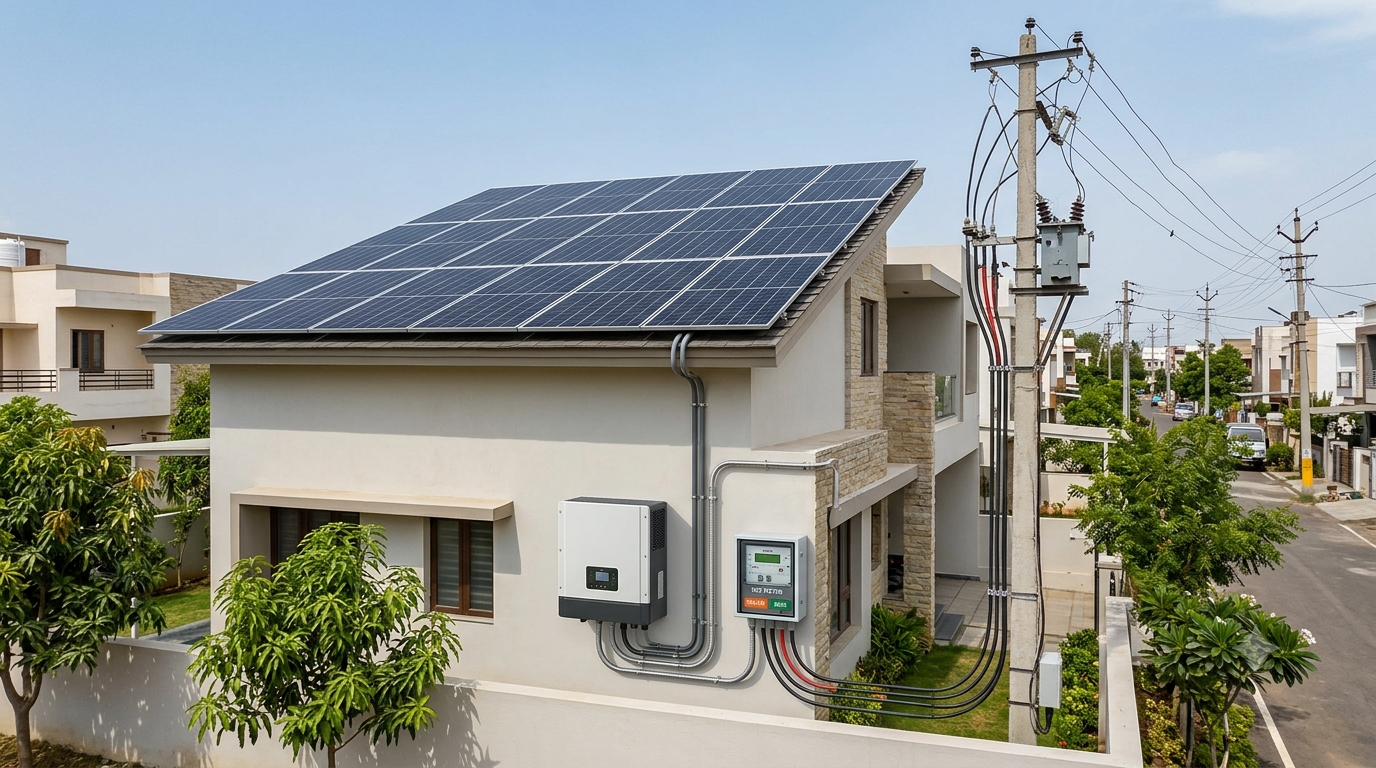
Bifacial panels can be considered for residential rooftops where the mounting arrangement and surrounding surfaces allow sufficient light to reach the rear side of the module.
Commercial Solar
Commercial buildings can use bifacial modules to generate clean electricity while making productive use of available rooftop space.
Industrial & Warehouse Solar
Large industrial rooftops can provide suitable installation environments for bifacial modules, particularly when the mounting configuration allows useful rear-side irradiance.
Ground-Mounted Solar Projects
Ground-mounted installations can offer favorable conditions for bifacial energy generation because the rear side of the module can receive reflected light from the ground.
Solar Power Plants
Bifacial technology is particularly relevant for larger solar projects where system design can be optimized for rear-side energy generation.
Reflective Surface Installations
Sites with surfaces that reflect more sunlight can potentially provide greater rear-side irradiance and improve the contribution from the rear side of bifacial modules.
Bifacial vs Monofacial Solar Panels
The primary difference between bifacial and monofacial modules is their ability to utilize sunlight.
A conventional monofacial module is designed primarily around front-side generation, while a bifacial module can also convert suitable rear-side irradiance into electricity.
Bifacial Solar Panels with TOPCon Technology
Bifacial and TOPCon describe two different aspects of solar module technology.
TOPCon refers to the solar cell architecture, while bifacial refers to the ability of the module to generate electricity using light received from both sides.
A module can therefore combine both technologies.
Bifacial TOPCon panels use advanced N-Type TOPCon cells within a module designed to utilize rear-side irradiance.
This combination can provide high-efficiency front-side generation together with the potential for additional rear-side energy generation.
The actual performance depends on the module specifications and installation environment.
Bifacial Solar Panels with HJT Technology
HJT technology can also be combined with bifacial module construction.
HJT uses a heterojunction cell structure designed for high efficiency and strong temperature performance, while bifacial construction allows the module to utilize sunlight reaching its rear side.
Together, these technologies can provide an advanced solar solution focused on efficient energy conversion and increased utilization of available irradiance.
The additional energy generated from the rear side depends on the site conditions and system design.
Factors That Affect Bifacial Energy Gain
Bifacial performance is not the same at every location.
Several factors influence how much additional electricity a bifacial module can generate.
Surface Reflectivity
The surrounding surface plays an important role. Brighter or more reflective surfaces can send more light toward the rear side of the module.
Mounting Height
A higher module position can allow more reflected and scattered light to reach the rear side.
Row Spacing
Adequate spacing between module rows can reduce shading and improve access to rear-side irradiance.
Module Tilt
The module’s tilt angle affects both its exposure to sunlight and the way reflected light reaches the rear surface.
Shading
Objects behind the module or within the mounting structure can block rear-side light and reduce potential bifacial gain.
Local Environment
Ground conditions, surrounding structures, weather, and available irradiance all influence the amount of useful rear-side light.
Because of these variables, bifacial energy gain should be evaluated using the actual project conditions rather than applying a fixed percentage to every installation.
Frequently Asked Questions About Bifacial Solar Panels
What is a bifacial solar panel?
A bifacial solar panel is designed to generate electricity from sunlight reaching both the front and rear sides of the module. The rear side can capture reflected and scattered sunlight from the surrounding environment.
How do bifacial solar panels generate more energy?
Bifacial modules can use additional light reaching their rear surface. This can increase total energy generation compared with a similar front-only module, depending on the installation environment.
How much additional energy can bifacial panels generate?
There is no single additional-generation percentage that applies to every project. Bifacial gain depends on factors such as surface reflectivity, module height, row spacing, tilt, shading, and rear-side irradiance.
Are bifacial solar panels suitable for India?
Yes. Bifacial panels can be used in suitable residential, commercial, industrial, and ground-mounted solar installations across India. The project should be evaluated based on its specific mounting and environmental conditions.
Do bifacial panels need a special mounting structure?
Bifacial panels can use standard solar mounting concepts, but the system should be designed to allow useful light to reach the rear side. Mounting height, spacing, structure design, and rear-side shading should be considered during installation.
Are bifacial panels better than monofacial panels?
They use sunlight differently rather than being universally better for every site. Bifacial modules can provide additional rear-side generation when installation conditions are favorable. A project should be evaluated based on its specific site and system design.